Internal linking is one of the most effective—yet frequently misunderstood—pillars of Search Engine Optimization (SEO). If you’re publishing blog content to boost your site’s search visibility, knowing how to structure your internal links can make or break your rankings.
Recently, a content creator brought up a common dilemma regarding internal link density:
The Scenario:
When writing a blog post, the creator analyzes the site’s existing content and naturally inserts 3 to 5 internal links targeting priority commercial pages (such as the Homepage or Location/City pages), along with about 2 links pointing to related blog posts.
The Concern:
A friend warned them that this might be risky, suggesting that some articles shouldn’t contain any internal links at all and that linking throughout every single post might be flagged as over-optimization by search engines.
So, who is right? Is inserting 3–5 strategic internal links per post too aggressive, or is it standard practice? Let’s dive into the SEO principles behind internal linking.
The Short Answer: Your Strategy Is Spot-On
If you are inserting links naturally within relevant contexts, your current strategy is not only safe—it is an SEO best practice.
Your friend’s concern comes from a good place (avoiding Google penalties), but omitting internal links or artificially limiting them across your articles is unnecessary and can actually hinder your site’s performance.
As long as the links provide value to the reader and fit seamlessly into the sentence structure, search engines like Google actively encourage this level of interlinking.
Why Your Current Strategy Works So Well
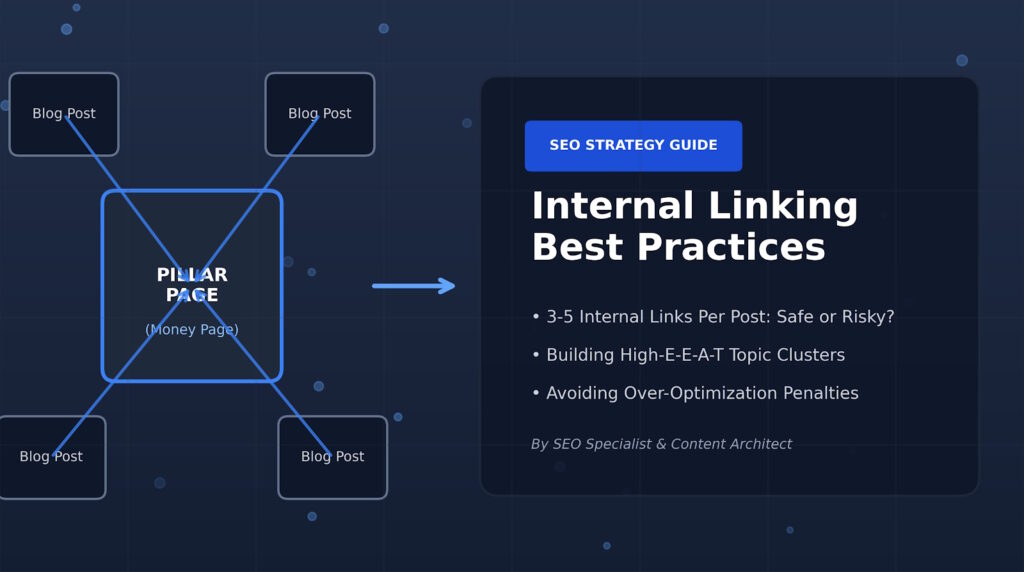
1. It Aligns with the “Topic Cluster” Model
Modern SEO relies heavily on establishing topical authority. By consistently linking supporting blog content back to your core “money pages” (homepages, service pages, city pages), you create a clear hierarchical pyramid. This passes link equity (PageRank) directly to the pages that drive sales and leads.
2. It Enhances User Experience (UX)
Internal links act as contextual signposts. When a reader finishes a paragraph about a topic and sees a link to a dedicated service or a deeper guide, it encourages them to stay on your site longer. Lower bounce rates and longer session durations send strong positive signals to search algorithms.
3. It Helps Search Crawlers Index Your Site
Search engine spiders (like Googlebot) navigate the web via links. Regular, structured internal linking ensures that crawlers can discover new posts instantly and re-evaluate destination pages efficiently.
Deconstructing the Fear: What Actually Triggers Penalties?
Why did your friend worry in the first place? They were likely thinking of over-optimization penalties. However, algorithms don’t penalize sites simply for having internal links—they penalize unnatural manipulation.
Here is a quick breakdown of the difference:
| Natural Strategy (What You’re Doing) | Over-Optimization Risk (What to Avoid) |
| Links are contextually embedded inside meaningful sentences. | Forced links shoved into irrelevant paragraphs. |
| Anchor text varies naturally depending on sentence flow. | Exact-match keyword anchor text repeated across 100% of posts. |
| Tailored links inserted manually during editorial review. | Automated widgets or footer blocks blindly inserting identical links. |
4 Best Practices to Perfect Your Linking Strategy
To ensure your strategy remains bulletproof while maximizing ranking potential, follow these four rules:
1. Vary Your Anchor Text
Never use the exact same keyword every single time you link to a page. Combine:
- Exact keywords: “London cleaning service”
- Long-tail phrases: “how to hire professional cleaners in London”
- Natural/Brand prompts: “view our service details here”
2. Place High-Value Links Early
Links placed in the upper third of an article body tend to receive higher engagement and carry stronger contextual weight than links buried at the very end of a page.
3. Adjust Link Count Based on Article Length
Instead of sticking strictly to a fixed count, let content length dictate volume:
- Short post (800 words): 2–4 internal links.
- Comprehensive guide (2,500+ words): 5–8 internal links.
4. Avoid “Orphan Pages”
Leaving an article completely without internal links (as your friend suggested for some posts) creates an orphan page. An orphan page receives no link equity, is hard for Google to contextualize, and rarely ranks well. Every page on your site should connect logically to the broader ecosystem.
Final Verdict
Keep doing exactly what you are doing! Your strategy of linking to 3–5 core commercial pages and ~2 related blog posts per article is clean, professional, and structurally sound. Just keep the anchor text varied and the placements contextually relevant, and your site’s SEO will continue to thrive.